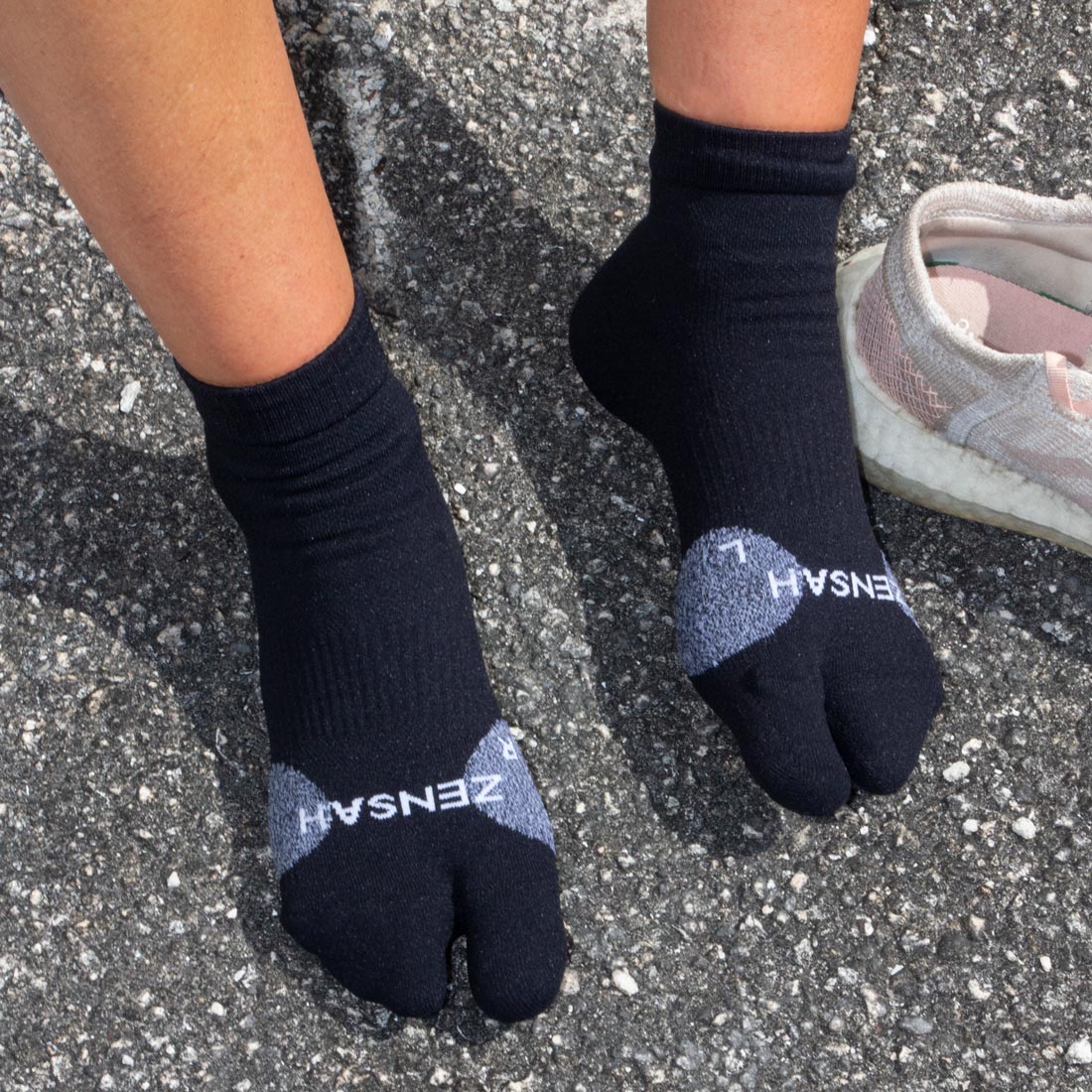
Although bunions cannot always be prevented, you can reduce their impact by wearing shoes that do not pinch or rub against them. Wide running shoes with more support and lower heel drops may provide relief as could taping or pads to reduce friction on a bunion.
Wear the Right Shoes
Bunions can cause great discomfort during running. Luckily, there are simple solutions available to minimize its effect. First and foremost is finding shoes suitable for your bunions; narrow and tight shoes may put too much strain on the front of your foot, as well as further aggravating the condition. Avoid flip-flops as these require you to repeatedly flex your toes in order to hold them onto your foot causing further strain on the bunion.
Find running shoes with wide toe boxes to give your toes room to spread out more, which can reduce rubbing and friction in that area. Also look for cushioning that absorbs shock to further alleviate stress on feet and bunions. If this still causes pain while running, icing the area or using shoe inserts that better distribute pressure may provide relief.
Tape Your Toes
Bunions can be caused by both genetics and lifestyle factors. People who wear tight shoes, particularly high heels, are at a greater risk for bunions to form; women due to hormonal fluctuations also tend to be more prone.
When running, podiatrists often recommend taping your toes with kinesiology tape or toe separators to maintain proper positioning of toes and reduce friction inside shoes. Furthermore, orthotics may be prescribed specifically to your needs for added support.
Exercise for bunions should include both foot and toe exercises to keep them from worsening, such as sitting with feet together on a flat floor while stretching upwards for 30 seconds at a time, sitting on a chair with feet flat on floor, stretching your toes for 30 seconds at a time, rolling textured balls along foot and toes, etc. All these methods can reduce pain and improve blood flow to feet – although for optimal prevention speak openly with your podiatrist about running routine and risk factors when discussing running routine and risk factors with them before beginning to run!
Change Your Routine
Bunions are a frequent foot condition among runners that can lead to significant discomfort. Not only is this condition unpleasant, it may also disrupt workouts or require medical intervention for injuries that arise as a result. In extreme cases, bunions could even force some runners out of running altogether! Luckily, simple changes and conservative treatments may provide relief and keep bunions from worsening further.
Bunions are caused by excessive pressure on the feet, leading to misalignment of the big toe’s metatarsophalangeal joint. Wearing tight shoes often contributes to this issue and may be compounded further by factors like flat feet, high arches, or arthritis.
Use of appropriate footwear, taping the toes and practicing foot and toe exercises can all help reduce bunion discomfort while running, as can icing the feet and soaking them in warm water as well as using other treatments like whirlpool spa or foot massages.
See a Podiatrist
Bunions that interfere with running require treatment from a podiatrist for proper diagnosis and management. Padding and tape may be recommended to minimize pain while still permitting healthy active lifestyle, keeping feet in their usual positions reducing stress on bunions. Your podiatrist might even suggest physical therapy sessions as additional intervention to address inflammation and pain relief.
Avoiding bunions may not always be possible due to genetics and how we use our feet – such as running or wearing shoes with too much pressure on our toes – but when foot pain arises it’s always wise to visit a podiatrist because ignoring any symptoms will only worsen matters further. If conservative methods don’t work then surgery may be needed in order to restore big toe alignment.